Friday, October 3, 2014


Change
 
 
Change is such a simple word, but so hard to do.  It is especially hard in the classroom. If what you are doing to manage student behavior isn't working then it's time to change.  Even if the school year is well underway it is never too late to make a change and establish rules and routines for your classroom.  Look over the list below of questions that will help you decide if you need to make a change in your classroom management. Be honest! No excuses!  Take time to reflect on your answer and what you can do to make a change.
 
1. Do you know your students?  What is their home life like?
2. Do you have a set of no more than 5 classroom rules written in a positive way and posted so all can see?
3. Do you focus on the misbehavior rather than the student?
4. Do you get the full attention of the class before you start speaking?
5. Do you check to make sure all students are following directions?
6. Do you have ideas/activities in place for students who finish early?
7. Do you have classroom rewards and consequences?
8. Do you have your days and weeks fully planned or are you just "winging it"?
9.Do you set limits and apply them fairly and consistently?
10. Do you have procedures in place for what you want the students to do? Have you practiced and explicitly taught these procedures?
 
Responding to misbehavior
Do you find yourself responding to misbehavior in an angry fashion?  We all get frustrated and angry, but often that does not get the results you want and often escalates the situation.
Look over the different ways you can respond to student misbehavior. Choose 1 you would like to practice. You may also want to add your own.
 
1. Before responding, take a deep breath and count to 5.
2. Say the misbehaving child's name and nothing else.
3. Move closer to the student.
4. Use proximity praise. 
5. Quietly remove the object that is distracting the student. 
6. Provide a choice for the student.  Let them choose. Stay calm and don't respond angrily.
7. Don't argue with the student. 
 
Don't be afraid to ask for help. Ask another teacher or find a blog/forum/Facebook/web sites  to help you.  We've all been there!


Friday, September 26, 2014

Stressing Out!


Take a rest; a field that has rested gives a bountiful crop. *Ovid


Hannah dealt with her first college tests this week.  She quickly learned how stressful they can be.  She studied hard and will be glad when 2:00 comes today because she will be finished with her math test.  This is the last one this week. But then, there's next week!

All this stress was stressing me out!  My teachers were stressing too!  But then, as teachers we are always stressing about many different things.  We especially worry about out students and how to reach the ones who are struggling, the ones who need higher level activities, the ones with a not so great home-life, and the list goes on and on. 

Stress can be many things to us.  It can be anxiety, conflict, frustration. Recognizing stress and taking care of yourself is very important to your well-being.

Some indicators of stress are: perspiring more, hot and flustered, tense muscles, dry mouth, stomach knots, faster heart beat and quickened pulse.  Some emotional indicators of stress are anxiety, fear, depression, anger, sadness, apprehension, and grief.  Aggressiveness, avoidance, withdrawal, and irritability are a few of the behavioral indicators of stress.

Some ways to take care of yourself include taking a short break, relaxation exercises, taking a walk, sleep, and taking deep breaths.   Some ways to be proactive about stress include visiting with your health care provider, talk to friends, get a good night's sleep, and regular exercise.

If you see someone stressing out then be a friend who will listen to them and help resolve problems the friend may be encountering.  Organize meetings with others who are having similar stressful situations.  It always helps to know there is a support group and you are not in it alone. 

Yes, teaching is stressful, but rewarding.  Just go down the hall, find a friend, and drive to the nearest Starbuck's.  There's nothing like a great cup of coffee and friends to relieve stress!

Friday, September 19, 2014

Engaging Students: Think-Pair-Share


One of our district's initiatives this year is student engagement.  Think-Pair-Share is a strategy that will engage the students and get them thinking on a higher level.  It is designed to provide students with time and structure for thinking about a topic. The students will formulate different ideas and share these ideas with a peer.  Instead of the teacher asking a question and calling on a student this strategy involves all the students by having them share with at least one student. This increases the student involvement in the learning.  As students discuss their ideas, the teacher can  walk around the room and listen to the students' conversations and give appropriate feedback.
 
 
In this strategy, the teacher asks a higher-level question, students have time to think individually about the question.  Then, they work in pairs to discuss and solve the problem.  Next, they share their ideas with the class. This strategy can be use on the spur-of-the-moment or as a planned activity.
 
 
To implement this strategy some preplanning needs to take place.
 
  • The teacher must decide on the question/s that target key concepts that the students have been studying.
  • Describe the think-pair-share strategy to the students.  Give guidelines for discussion. Explain to the students that they think individually about a question or topic, pair with a partner, and share their ideas with the class.
  • Have students model the procedures for using this strategy. The teacher should check for understanding of the procedures.
  • The students should practice the strategy as the teacher monitors and supports students them.
  • Students could also write or diagram their responses.
  • Think:  the teacher begins by asking a specific higher-level question.  Students think about the question for about 1-3 minutes.
  • Pair:  The students are paired with another student. Pairs may be assigned or the students may pick their partner.  Students share their thinking with their partner, discuss ideas, and ask questions about their partner's thoughts on the topic. Two to five minutes is usually the amount of time for the paired discussion.
  • Share:  After the paired discussing, the discussion is expanded to whole-group. Each pair selects the partner who will share their thoughts with the class.  After the class shares the teacher may choose to have them get back in their pairs to see if their thinking changed as a result of the sharing time. 
 
 
The following website has think-pair-share information.  The chart below is a sample activity from the site that could be used with the student pairs.
 
 
 I hope you will use this strategy!  Happy teaching!


Friday, September 12, 2014


As I observed in ELA classrooms these past few weeks there has been a focus on plot and how it develops.  I heard great discussions about this topic.  In one classroom the teacher was making connections to movies the students had seen.  Of course, the movies they had seen were all scary and I had not seen any of them (not a scary movie fan!)  The students were very involved in the discussion and really started to understand the concepts of climax, resolution, etc. from making real life connections.  Real life connections whether they are text to text, text to self, or text to world are very  important.  It gives the students something to "hang their hat on" and they can relate to what's happened in their lives. Connections stimulate their background knowledge and enhance comprehension.  Connections are not just for ELA.  When a student can make a real-life connection in math, science, social studies, and any other subject area it helps them understand the importance of what they are learning as well as helps them comprehend the topic.  As teachers, try to help students activate these connections at every opportunity.
 
Plot is a very hard concept to teach and I have included two YouTube videos that help explain plot in a fun way.


I hope you have a wonderful week with lots of  connections!


Friday, September 5, 2014

HMH Module Lessons Videos


Hannah is enjoying A&M.  I miss her, but I am glad she is so happy.  She especially enjoys her education class.  She will be assigned a classroom in the area to observe.  She is really looking forward to that.

All this started me thinking about the lessons she will observe. Then I started thinking about how I could pass some model lessons on to other teachers as well as Hannah.  I searched and found a site on YouTube that had HMH model lessons. There are several lessons listed as you scroll down. I hope you find these lessons helpful.  Happy Viewing!


http://www.hmhco.com/shop/education-curriculum/reading/core-reading-programs/journeys/features/teacher-model-lessons

Friday, August 22, 2014


“Leadership and learning are indispensable to each other.”
 – John Fitzgerald Kennedy
 
CISD's theme for the year, “Learning today, Leading tomorrow”, has special meaning as Hannah leaves for A&M this Sunday. (Whoop!)  I realize the importance of her education at CISD and how it has prepared her for the leader she will become.  Not only did she learn academic things, but she learned many life lessons.  She learned how to be a member of a group and the importance of team work through band. She learned the importance of leadership through all her school clubs and offices she held. She will now have to take all she learned and apply it and hopefully to make good choices. There are so many things we learn in life through school.
As an educators it is important to continue to learn whether it is the latest technology or educational trends. If we don’t continue to learn, we cannot prepare students to be the leaders they need to be after graduation.
 
Below is a link to an article on project based learning.  Hopefully you will learn something from the article and how project based learning will help students be leaders for tomorrow.
 

Friday, August 8, 2014

Are You Ready for the New School Year?

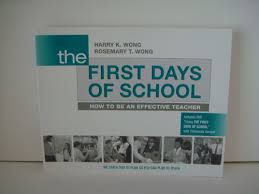
Ready or not school is just around the corner!  I will begin my 35th year in education!  It seems like yesterday that I was setting up my first class room.  I still wonder if my students in that first class are productive members of society.  I made lots of mistakes, but learned a lot too.  As I reflect back on the years, I have seen many educational trends come and go and some come back again. Over the years, I have used and seen many classroom management tips and procedures.  I have reflected on what would be the best advice for a new or veteran teacher.  I believe one of the best pieces of advice for teachers is to have your procedures in place.  Begin teaching those procedures from the first bell on the first day and continue until the final bell on the last day of school. What are your procedures?  How should they enter the classroom, what do they do after they enter the classroom?  Will your procedures keep them engaged and out of trouble until you are ready to begin the morning? What is the procedure for sharpening pencils?  How do they hand in papers when they are finished? You will need to practice and model what that procedure looks like. Be prepared to reteach your procedures. Start making a list of procedures you want your students to follow.   What are your expectations?  Whatever they are will greatly influence your students achievement and success in your classroom.  Make sure your expectations are positive.  Look at the difference between "We are going to win the attendance award at the end of the year" and "We will be lucky if we get half the points needed to win the attendance award.  Which one motivates you more?  Make sure you tell your students on day one how happy your are to have them in your class and what a great year it is going to be.  Many first day of school ideas can be found on Pinterest. Harry Wong's book, The First Days of School is what every teacher should read and have as a handy reference.